Essay • 2026 • 6 min read
Part3 エゴの滅却と、組織で生き抜く冷徹な処世術

Profound Ego-Surrender as Art of Organizational Survival

  
Can the awareness of an ending make each morning luminous?

Chapter 2. The Code Beneath the Code - Before Rules, There Was a Way of Being Part3
Exploring the forbidden Hagakure, this essay reveals how absolute ego-surrender seamlessly coexists with a fiercely pragmatic art of organizational survival.


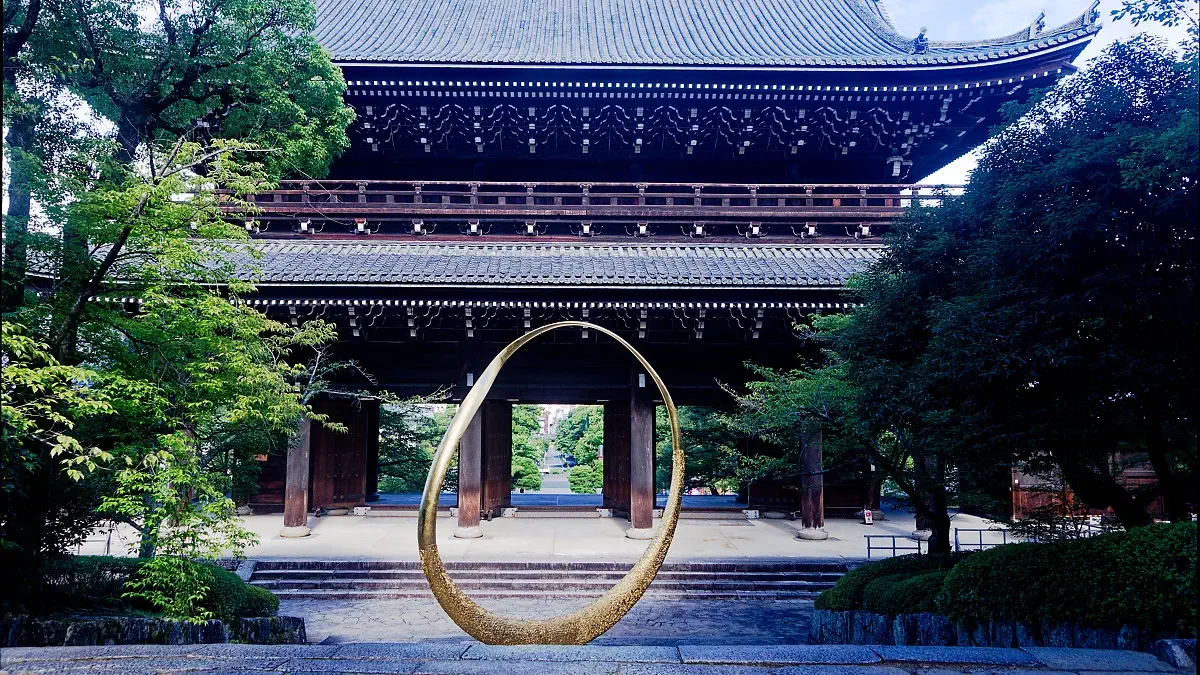
Image : View from 山門(Sanmon=Gate of The Temple)
Japanese temple gates (sanmon) act as spiritual thresholds, dividing the sacred interior from the mundane world. They stand as a symbol to cast off earthly desires before crossing into the sacred.

間
間 MA Editorial BiScène Kyoto
Profound Ego-Surrender as Art of Organizational Survival Can the awareness of an ending make each morning luminous?

The Oral Transmission of Forbidden Sovereignty

Where Nitobe and Tenshin tailored formal attire for a foreign gaze, there exists a text that was never meant to leave its threshold—a dictated oral record sealed within one domain. It is , spoken by , an eighteenth-century retainer of the Saga Nabeshima clan.

Tracing the history around this book and the words laid down in it leads us to one remarkably practical "aesthetic of action" that still resonates today.

A text never meant for public reading. Hagakure was not written to be known widely. It was a private transmission, passed silently among samurai within a single domain—raw words spoken without concern for outside eyes, addressed only to those inside the wall. Yet after the war it became target material under GHQ's censorship, and most Japanese people today know almost nothing of its original form. It has been kept far from the public stage.

and the discipline of living. The figure who leaned deeply into this forgotten text and revived it for a modern audience was the novelist . What he saw there was not, as popularly assumed, a blind obedience to death. It was something far more intense: how to live each present moment with absolute purity without knowing whether tomorrow exists. To prepare oneself daily so that beauty holds at every instant—to train body and mind to their limits—was, for Mishima, an individual aesthetic devoted entirely to the now.

But what gives this text its surprising depth is this: alongside that fierce individual aesthetic it simultaneously describes a coldly practical "art of social survival." How to relate to one's superior. How to navigate within an organization and endure. The vividness of these passages overlaps uncannily with the modern salaryman's daily existence. Here the austere individual aesthetic and absolute loyalty to structure cohabit in one person without friction.

The famous line—"Bushidō is found only in dying"—is perhaps its most cited passage. Regrettably, during wartime this phrase was repurposed as convenient military propaganda, a tool encouraging the glorification of death. But in Hagakure's original context I read no such romanticism. Rather it is an intensely fierce affirmation of life: only by keeping the unknown arrival of death constantly felt in the body does the importance of daily conduct and discipline become infinitely sharp. To be always aware that the end may come at any moment is to make each present day luminous with consequence.

And this individual aesthetic was never about making oneself stand out. It flowed directly into absolute devotion—to society, in that era, to one's domain and lord. To annihilate one's ego completely and dissolve fully into a given role: it was in that selfless stillness that the fierce "individual aesthetic" and "absolute contribution to structure"—two elements that seem violently opposed—coexisted not merely without friction but as the highest expression of personal grace within a single body.
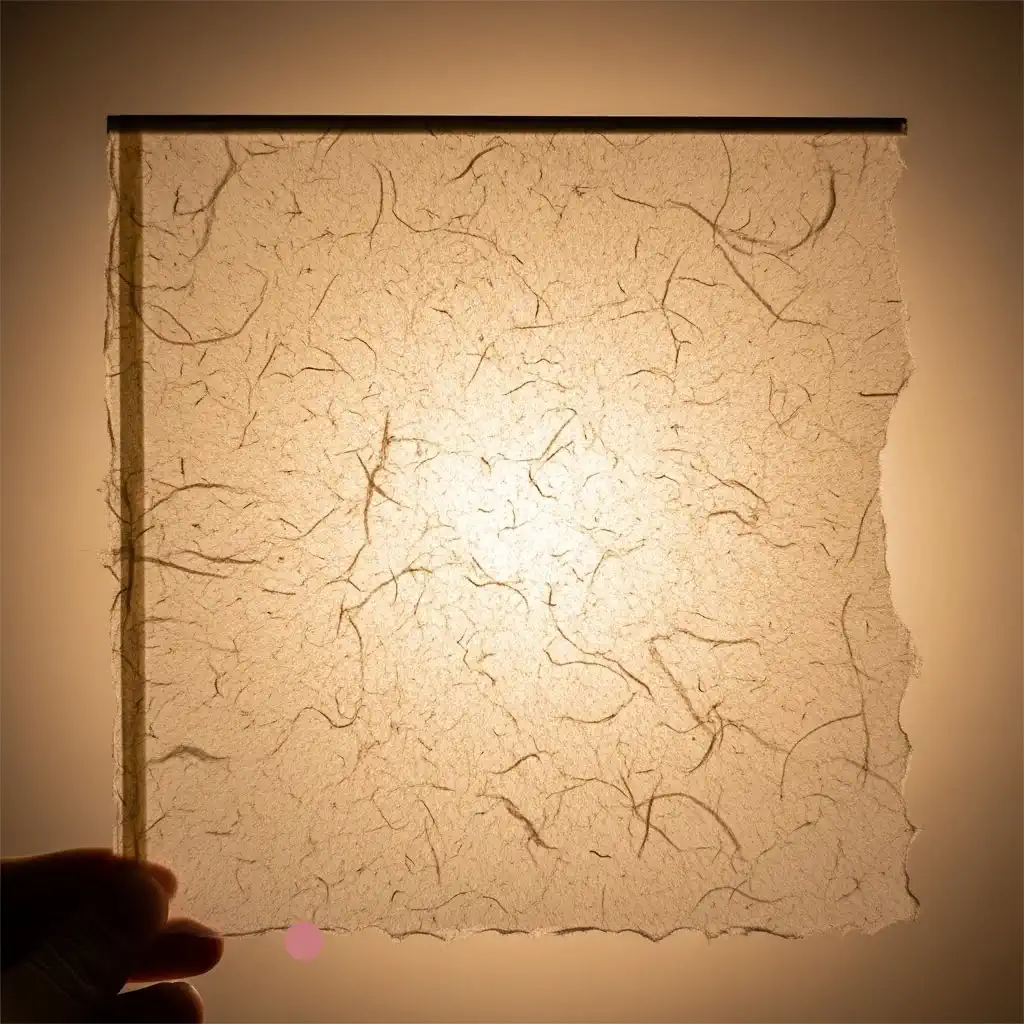
和紙(Washi=Japanese Paper)
和紙(Washi=Japanese Paper) Crafted from strong plant fibers, washi boasts exceptional durability. Used in screens and lamps, its unique texture acts as a natural diffuser, creating a soft, warm, and distinctly Japanese ambiance.

The Dissolution of the Ego

What Western observers read as absence or contradiction was, on this landscape, an entirely ordinary practice: dissolving oneself into a shared space. We are not living in some special society that privileges the group over the person. I think we have simply found a kind of spiritual beauty in making one's ego slightly translucent—in tuning oneself to the room and the role before us.

Seen this way those strange modern behaviors from Part 1 take on another shape: they are perhaps double-edged manifestations of "individual aesthetic" and "social conformity" as two faces of one coin. The teeth that emerge from anonymity. The apology offered without fault. Both are the same mechanism viewed from opposite angles.

Yet thoughts crowd my mind as I write. Is the selfless apology we repeat daily truly rooted in this aesthetic? Or—like the hollowing Mishima sensed with growing unease—has it become a surface gesture, form severed from commitment? There is a thin edge to this question that I cannot quite press down.

Lowell's missing individual, Benedict's paradoxical coexistence, Nitobe and Tenshin's carefully spun translations: none of them were wrong. I believe that plainly. But beyond their words, at a depth Western logical systems can never fully articulate in text, another structure operates. A precise one. Not mystical atmosphere. Not vague feeling.

It is the architecture we call —the "reading of the air," the "reading of the flow," the "reading between lines." An unspeakable signal system so refined that it functions below language entirely. The mechanism by which our behavior is governed from beneath, shared as matter-of-fact among most Japanese people without a word being spoken. This invisible order—the one we immerse ourselves in every day without noticing—lives quietly inside what might be called "the space before words." And I am not sure that space will ever fully open itself to the outside. Perhaps that is exactly how it was meant to remain.

Card Folio • 空間語彙のカルタ

Three Spatial Lexicons: The Sacred Karuta Folio

Tap or hover over each consecrated archetype to reveal its spatial mechanics and philosophical gloss. (各カルタをクリックまたはホバーすると、空間構造と注釈が開きます)

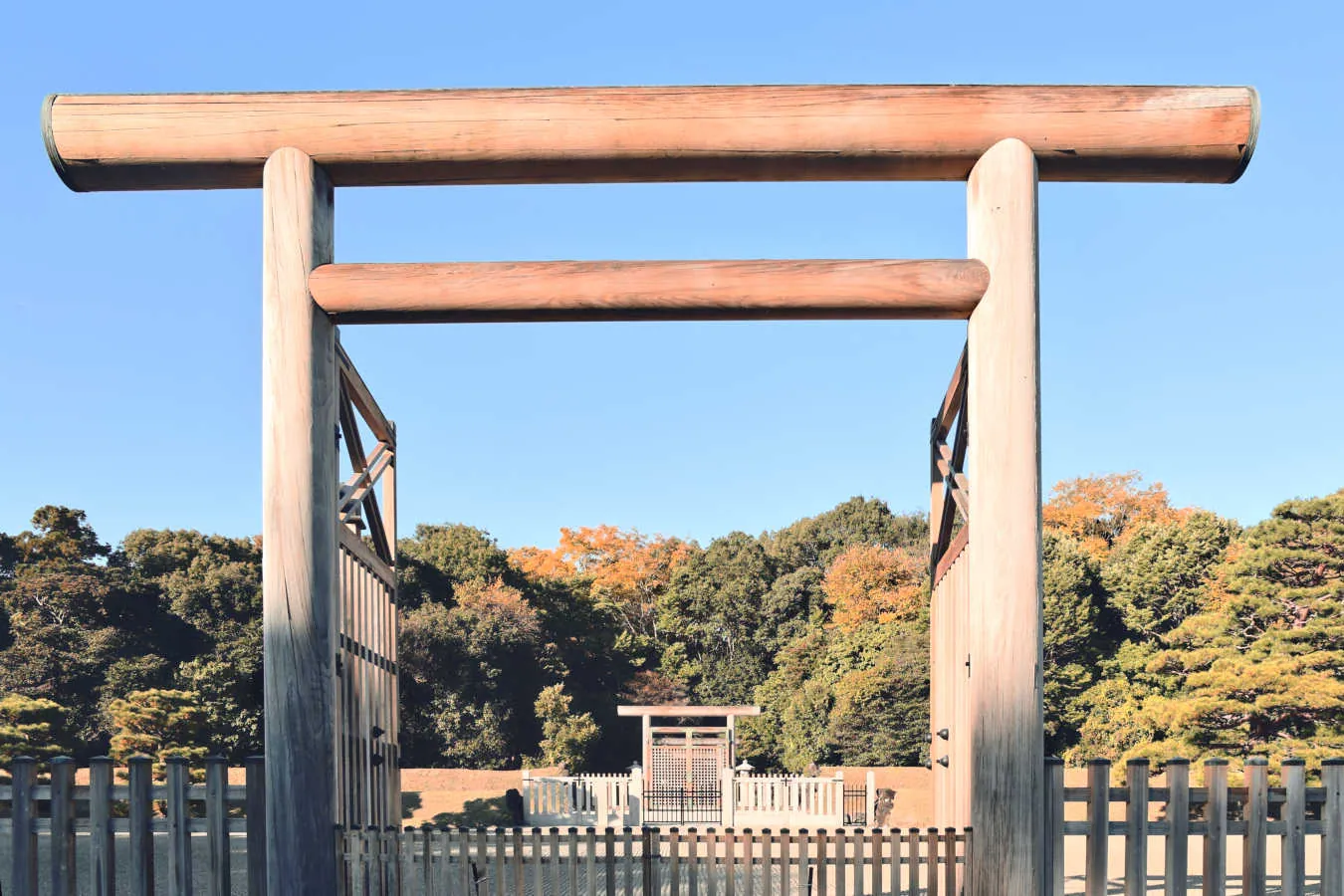
Ancient cryptomeria forest and gravel approach at Emperor Jimmu Mausoleum
八 Miryad of Spirits
Yaoyorozu no Kami

八百万の神

Animistic Belief

八 FOLIO 01

八百万の神 Yaoyorozu no Kami

Animistic Belief

「数え切れないほど無数に存在する自然界の神」を指す古代の表現。道具にも霊威を認める。

The animistic outlook that myriad spirits dwell in mountains, rivers, trees, animals, and even everyday tools. 'Yaoyorozu' means an uncountable multitude rather than a literal number.

FOLIO 01
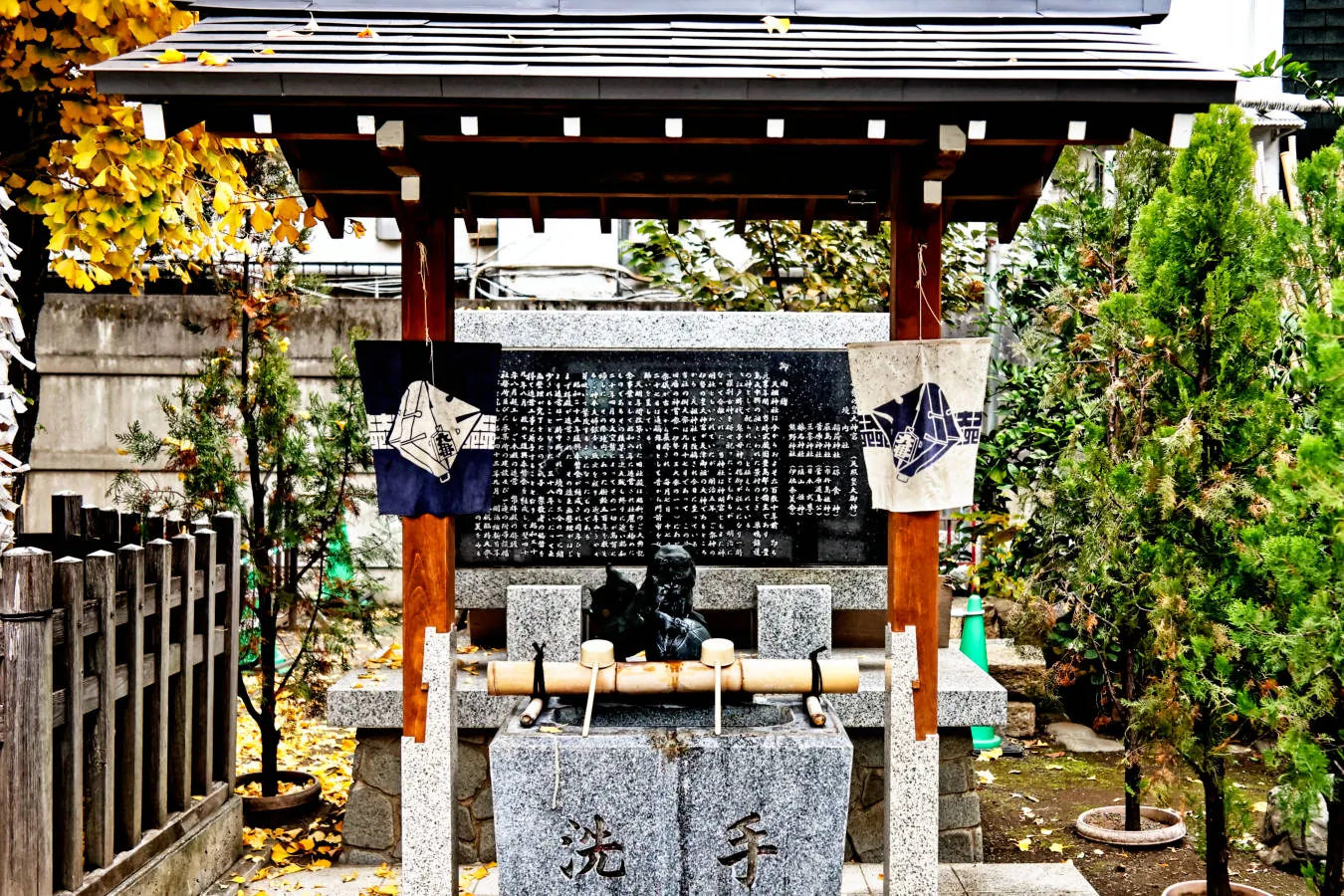
Natural granite water basin chouzuya filled with spring water and ladles
手 A Water Pavilion
Chōzuya

手水屋

Visitors Purification

手 FOLIO 02

手水屋 Chōzuya

Visitors Purification

川や海で全身を洗い清めた古代の禊を、手と口のみに凝縮した設備。柄杓で左右の手と口を清める。

A water pavilion at shrine entrances where visitors rinse their hands and mouth with a ladle, condensing the ancient practice of bathing the whole body in a river or sea into a symbolic gesture.

FOLIO 02
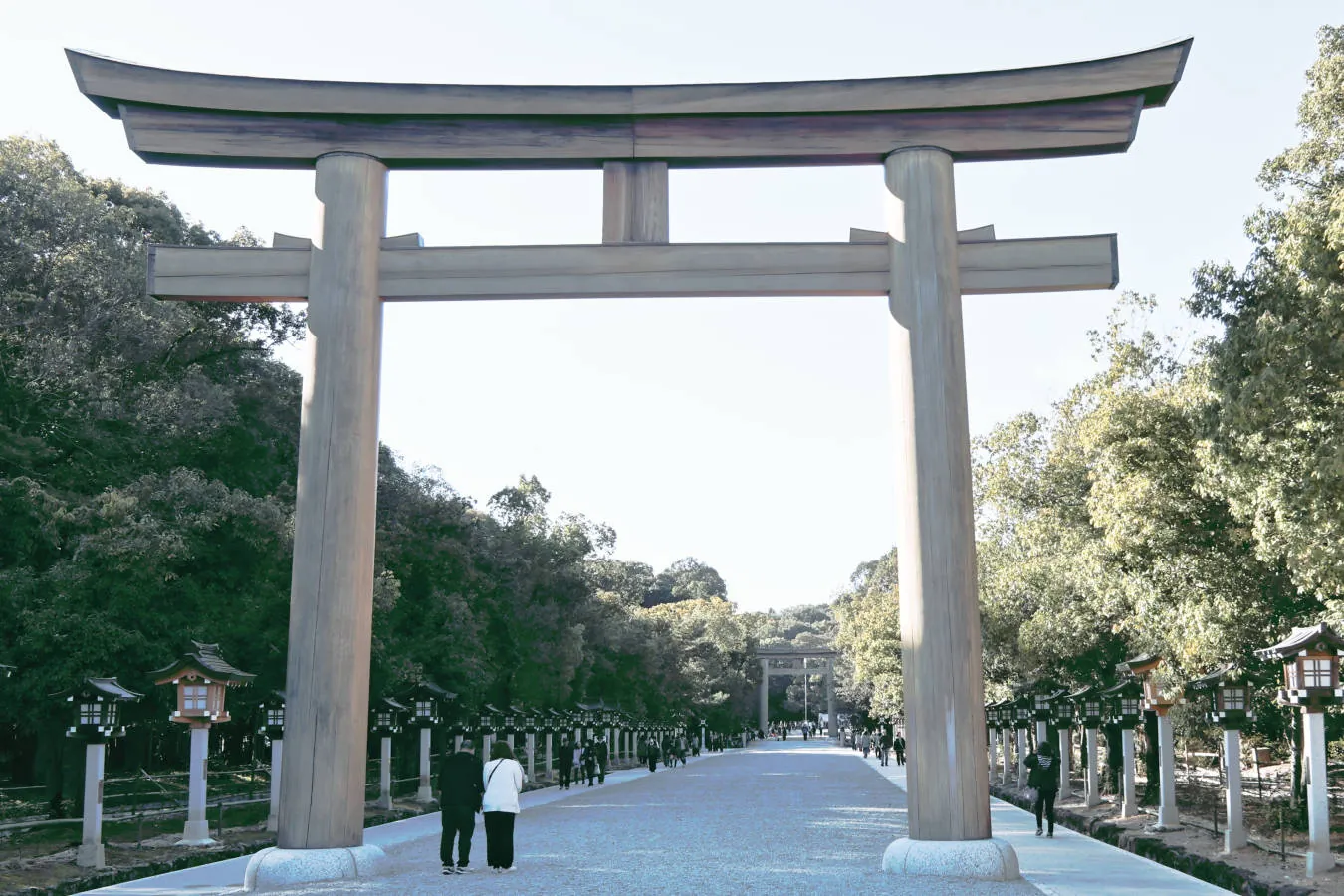
Expansive sacred white gravel path with towering trees leading toward the torii gate at Kashihara Jingu
正 Walking on Path Edges
Seichū

正中への配慮

The quiet etiquette

正 FOLIO 03

正中への配慮 Seichū

The quiet etiquette

参道の中央は神様の通り道とされるため、敬意を払い端を歩く不文律。

Etiquette for walking the sandō, the approach path to a shrine, often a long forest or mountain trail: its center, seichū, is the deities' passage, so visitors keep to the sides.

FOLIO 03