Essay • 2026 • 8 min read
Part 2 新渡戸と岡倉の日本論、外出用の正装だったのか?

The Illusion of the Single Code and Translated Dress Code

 
Does a bright beam always find a shadow to name?

Chapter 2. The Code Beneath the Code - Before Rules, There Was a Way of Being Part2
Decoding Nitobe and Okakura, this part reveals how Meiji intellectuals tailored formal cultural attire to defend national legitimacy against Western scrutiny.


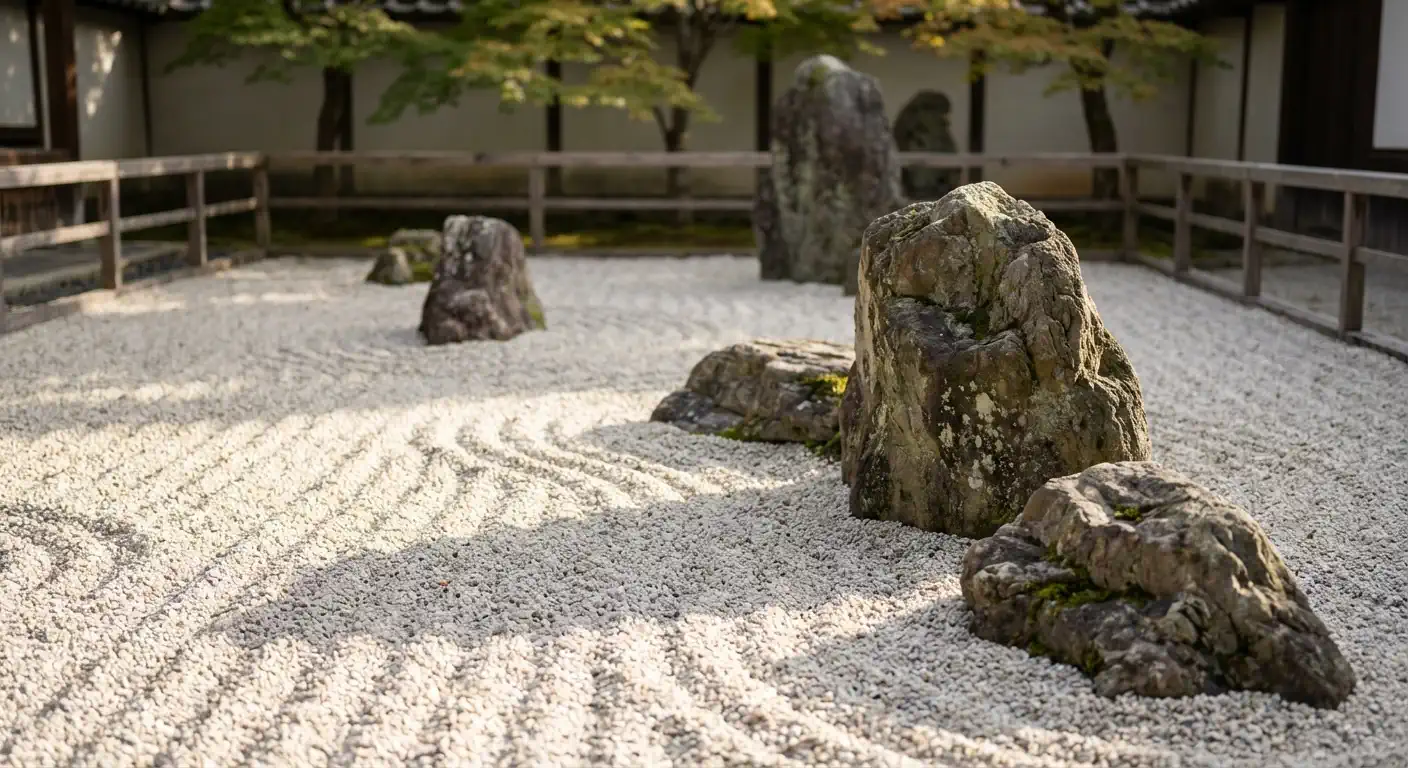
Image : 枯山水(Karesansui = Dry Landscape Garden)
A Zen garden expressing nature through raked sand and rocks. Ryōanji’s famous 15-stone layout, where one stone is always hidden, teaches finding contentment within imperfection.

間
間 MA Editorial BiScène Kyoto
The Illusion of the Single Code and Translated Dress Code Does a bright beam always find a shadow to name?

The Illusion of the Single Code

Two luminous observers, each touching this strange society and attempting to decode its underlying rules, left records that resist simple verdicts of right or wrong. Tracing their words surfaces something more interesting than error.

— . An American astronomer of the Meiji era, later known for his observations of Martian canals, who in 1888 published . There he recorded Japanese daily life with meticulous attention: people prioritizing family and group over personal desire, suppressing emotion to move through the world with even, quiet regularity. His conclusion—stated bluntly at the close—that "the individual does not exist in Japan"—has been read and reread on both sides of the Pacific as a kind of classic. From a Western measuring rod, Japanese behavior did register as an absence of self. But I wonder: behind that absence he described, was there truly only empty space? Or had his eyes met the surface of something his framework could not penetrate?

— . An American cultural anthropologist who, at the request of the U.S. government during World War II, wrote without ever setting foot on Japanese soil. As her title suggests she identified within the Japanese a paradox: the chrysanthemum (a love of grace and beauty) alongside the sword (a ferocity indifferent to life itself). She pointed to prisoners who were obedient yet would fight without regard for survival, concluding that their moral compass was not internal guilt but always the gaze of others—what she termed , a shame culture. That this book continues to be read by Japanese people across generations quietly astonishes me. And I sense Benedict too stopped at the edge of a question: why do elements so contradictory coexist in one society without fracture?

Both minds, I believe, attempted to read Japan through a single code—a strong singular light from Western logic. They trusted that if they shone it brightly enough, clear shadows would fall: "the conflict of the individual," "a sense of guilt." But what met their eyes was an object casting no shadow legible to their instruments, however fierce the beam.

From a Western vantage, dissolving the self into a shared field looks like loss. Behavior that shifts with context reads as incomprehensible contradiction. Their analyses captured one facet of Japanese society with remarkable precision. Yet beneath that surface—no matter how carefully examined from above—a layer existed their angle could not reach. A region visible only from inside the room.

This is, admittedly, my imagination as a modern reader. But what if the landscapes they saw were not absences or contradictions? What if Lowell's "missing individual" and Benedict's "watching the eyes of others" connect, at some deep register, to the very dissonance I felt in Part 1—the teeth emerging from anonymity when a single person is targeted, apologies offered not to assign blame but to steady the room?
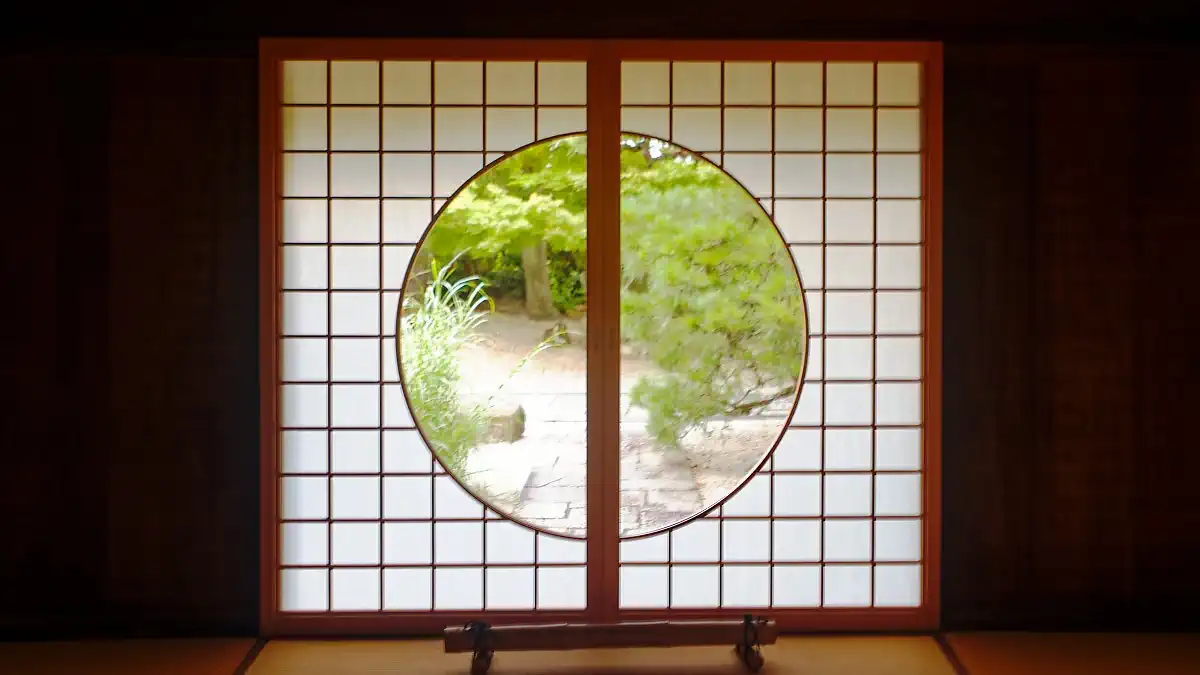
A Garden View Through Shōji
A Garden View Through Shōji The center of this shōji screen is ingeniously designed to function as a round window. It allows soft, diffused light to illuminate the room while simultaneously framing the tranquil view of the garden outside.
躙口(Nijiriguchi =Tearoom Entrance)
躙口(Nijiriguchi =Tearoom Entrance) The architecture of the tearoom entrance reflects the philosophy of Sen no Rikyū: all who enter must lower their heads and bow, regardless of their social rank. It is said that samurai were required to leave their swords on a rack outside before passing through this small door.

Cracking the Western Dress Code

The unseen layer their eyes could not reach was perhaps not a limit of their vision. It may have been something the Japanese of that era deliberately wove into a translation offered outward—precise, intentional, and partial by design.

Meiji Japan, in full agitation before approaching imperial powers, had to prove to the world that it was not "barbaric" but a civilized nation. With that urgent mission two works emerged presenting Japanese spirit in English with striking brilliance. What they contained was intellectual fortification built at the cost of life—an argument for national legitimacy constructed in the opponent's own tongue.

— : (1900). Confronted by Western intellect asking, "With no religious education, what grounds your morality?" and struck to his core by it, Nitobe rebuilt Japanese spirit logically in their language. He drew constantly on Christian ethics, on Western Chivalry, on the ideal of gentleman's conduct—translating the virtues of gi (righteousness), meiyo (honor), and rigorous jikotōgyo (self-control) into terms a European reader could hold. This was entirely new logic: taking what Lowell had called "the suppression of desire for the group" and inverting it, within Western code, into "devotion to noble obligation." A defense mechanism with no precedent in Japanese discourse.

— : (1906). Where Nitobe exported a dynamic ethics, Tenshin built an argument from the aesthetics of tea ceremony and Eastern art. As a quiet counterweight to Western materialism's speed he presented Teaism—the aesthetic of imperfection—housed in the tiny space of a tearoom. He even turned the words of Alice in Wonderland, widely known in England at the time, against its own premise: checking the arrogant Western gaze that looked upon Japan as an "Oriental Wonderland," while drawing them into his contemplative chamber.

These were, I think, the formal attire one puts on before stepping outside. What Meiji Japan constructed—conscious of the Western gaze, positioning itself among equals—was a carefully tailored dress code for a foreign social occasion.

Layering these two works reveals Benedict's paradox from a slightly different angle. She did not, of course, read both side by side and conclude contradiction. But the irreconcilable duality she observed from outside——mirrored precisely what Nitobe had called the "active face" and Tenshin the "still face." What appeared to her as strange contradiction was not a fracture in Japanese culture at all. It was, simply, the ordinary coexistence of seemingly opposing elements. The sword's logic Nitobe set into Western context; the chrysanthemum's aesthetic Tenshin revealed through his discerning eye—these two modes, translated separately by earlier generations as distinct formal garments, had always cohabited within Japanese people themselves without friction.

Both Nitobe and Tenshin refined their translation to fit a Western code. That very act, however, simultaneously cut away the irrationalities, the unspeakable regions no Western logical system could accommodate. They constructed an impeccable public face—yet deliberately left unspoken the foundational orientation supporting both modes from below.

They chose their symbols with care for a foreign reception hall, performing a refined dress code in the host's own language. But I have come to know that beyond this formal attire, directed toward the inner Japanese self rather than the external audience, another text exists—a warrior aesthetic spoken in an entirely different register. In that book, known to few even among Japanese today, breathes an "aesthetic of action" we still follow without conscious awareness. A grammar of conduct altogether separate from what Western eyes were invited to see.

Card Folio • 空間語彙のカルタ

Three Spatial Lexicons: The Sacred Karuta Folio

Tap or hover over each consecrated archetype to reveal its spatial mechanics and philosophical gloss. (各カルタをクリックまたはホバーすると、空間構造と注釈が開きます)

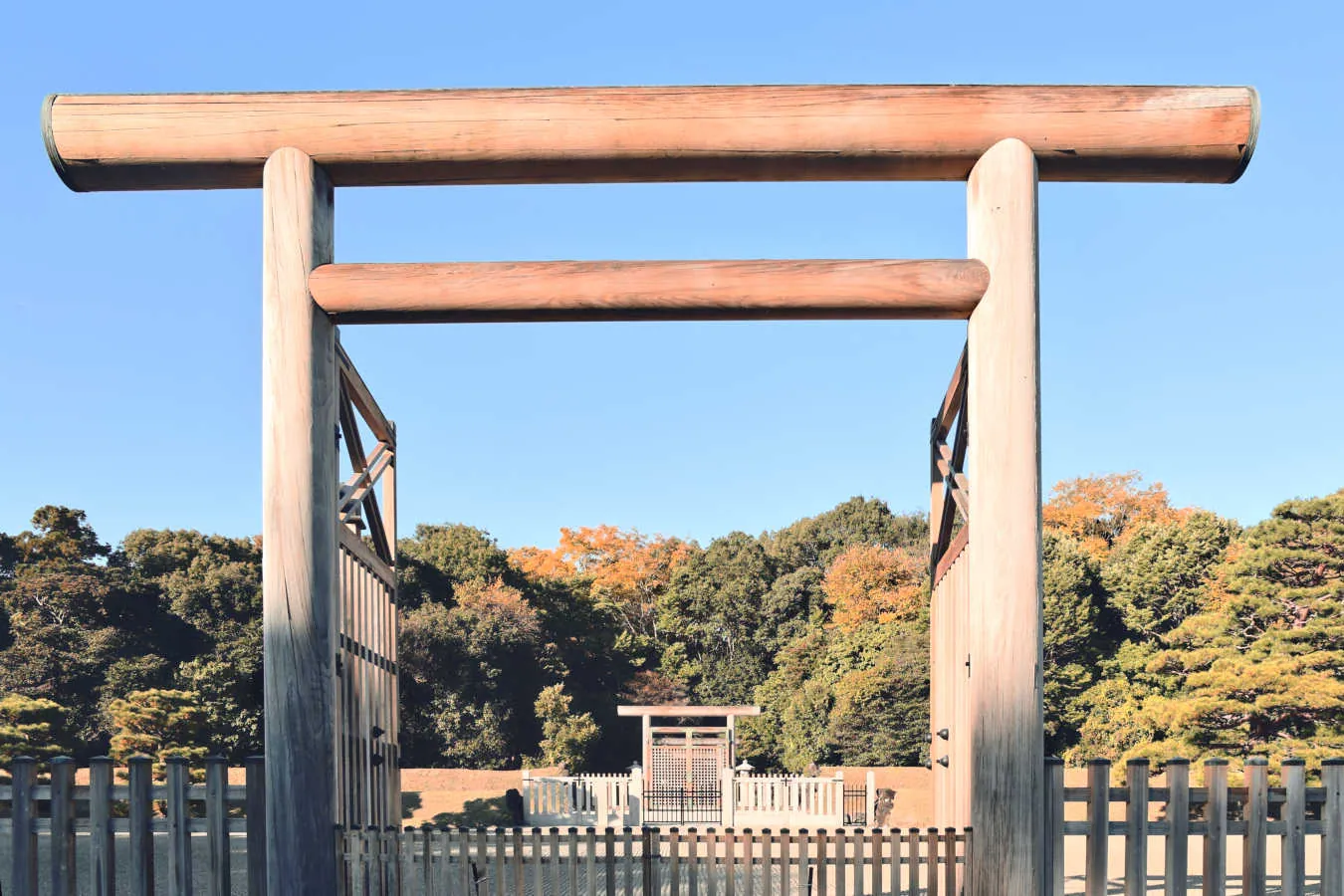
Ancient cryptomeria forest and gravel approach at Emperor Jimmu Mausoleum
八 Miryad of Spirits
Yaoyorozu no Kami

八百万の神

Animistic Belief

八 FOLIO 01

八百万の神 Yaoyorozu no Kami

Animistic Belief

「数え切れないほど無数に存在する自然界の神」を指す古代の表現。道具にも霊威を認める。

The animistic outlook that myriad spirits dwell in mountains, rivers, trees, animals, and even everyday tools. 'Yaoyorozu' means an uncountable multitude rather than a literal number.

FOLIO 01
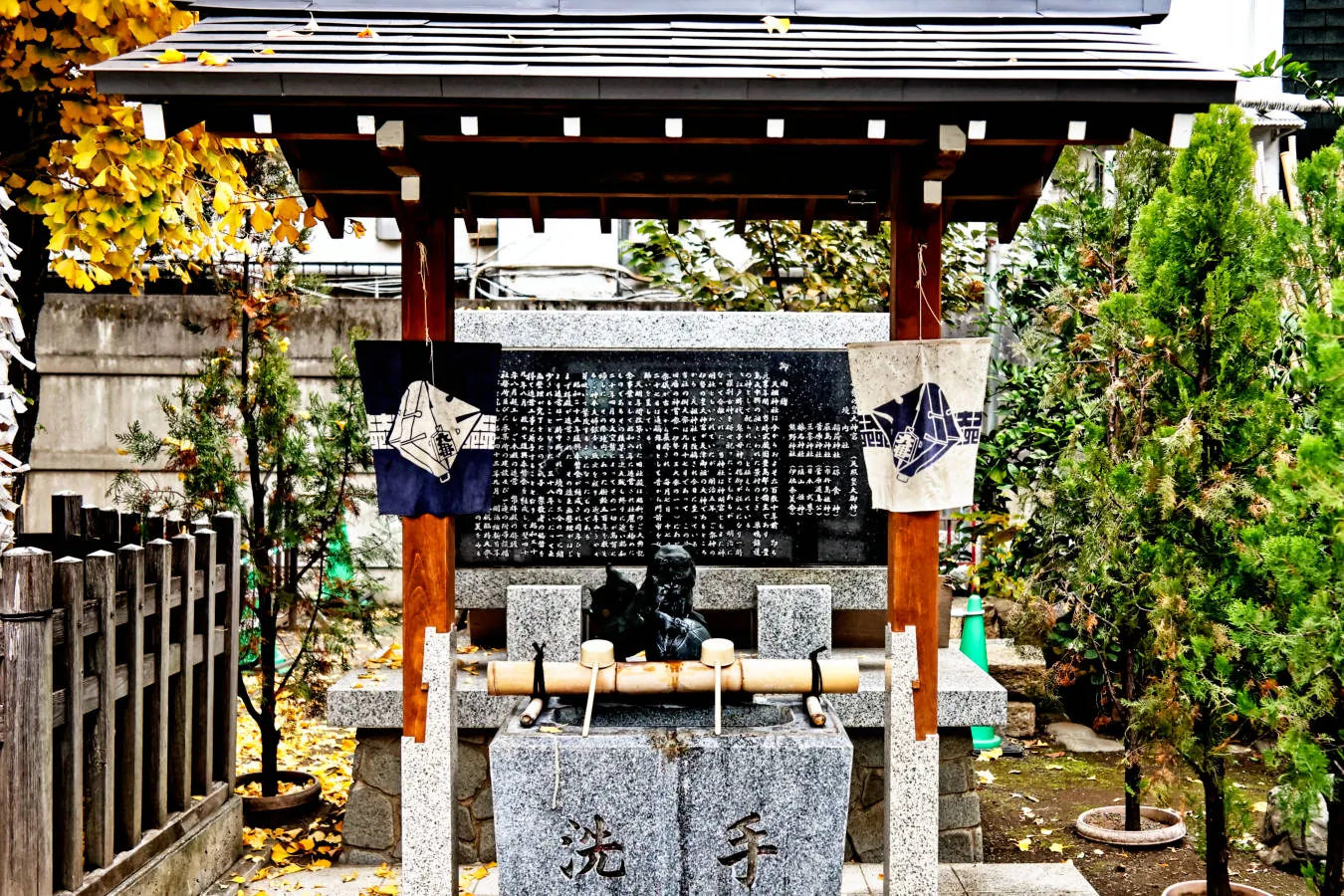
Natural granite water basin chouzuya filled with spring water and ladles
手 A Water Pavilion
Chōzuya

手水屋

Visitors Purification

手 FOLIO 02

手水屋 Chōzuya

Visitors Purification

川や海で全身を洗い清めた古代の禊を、手と口のみに凝縮した設備。柄杓で左右の手と口を清める。

A water pavilion at shrine entrances where visitors rinse their hands and mouth with a ladle, condensing the ancient practice of bathing the whole body in a river or sea into a symbolic gesture.

FOLIO 02
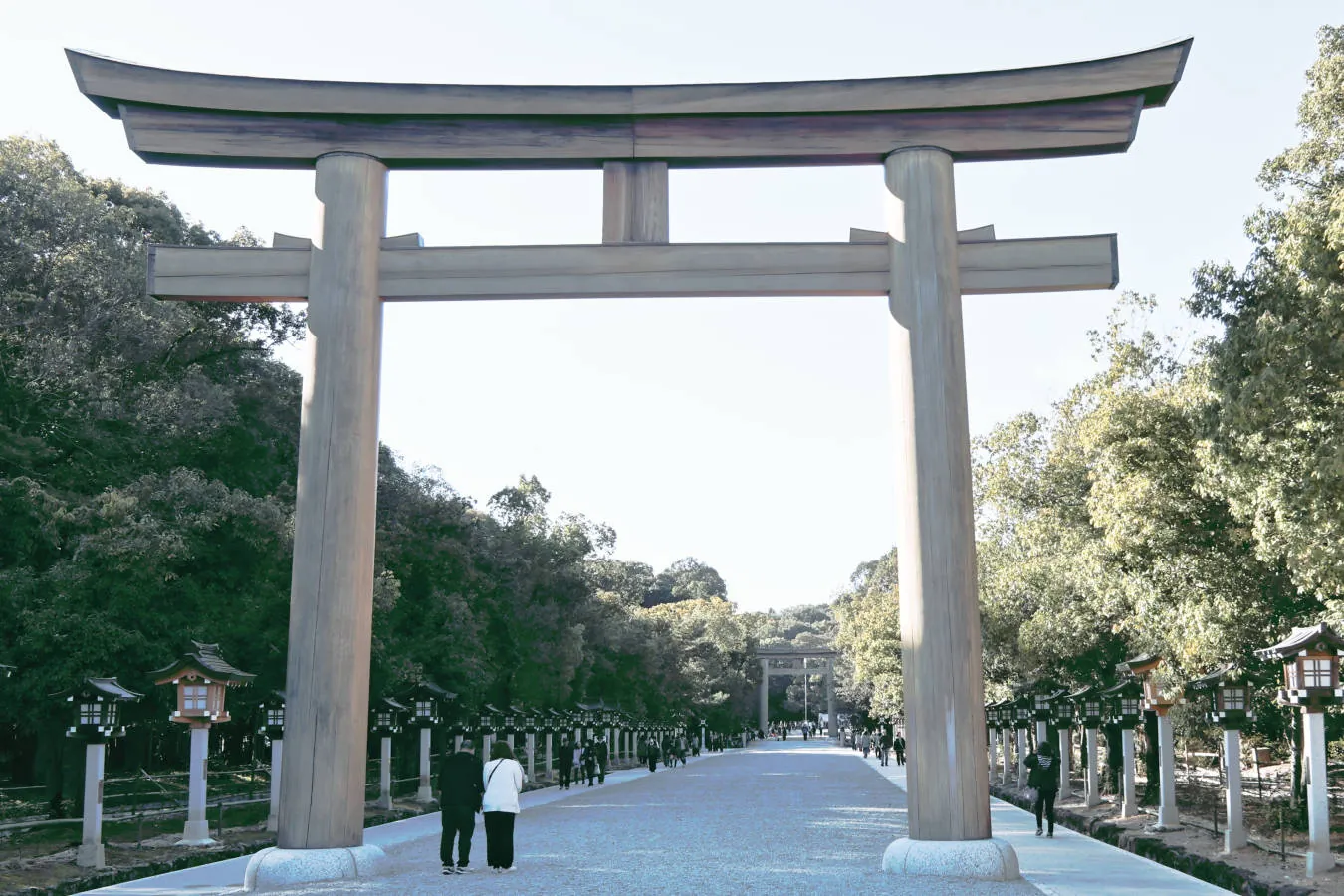
Expansive sacred white gravel path with towering trees leading toward the torii gate at Kashihara Jingu
正 Walking on Path Edges
Seichū

正中への配慮

The quiet etiquette

正 FOLIO 03

正中への配慮 Seichū

The quiet etiquette

参道の中央は神様の通り道とされるため、敬意を払い端を歩く不文律。

Etiquette for walking the sandō, the approach path to a shrine, often a long forest or mountain trail: its center, seichū, is the deities' passage, so visitors keep to the sides.

FOLIO 03